

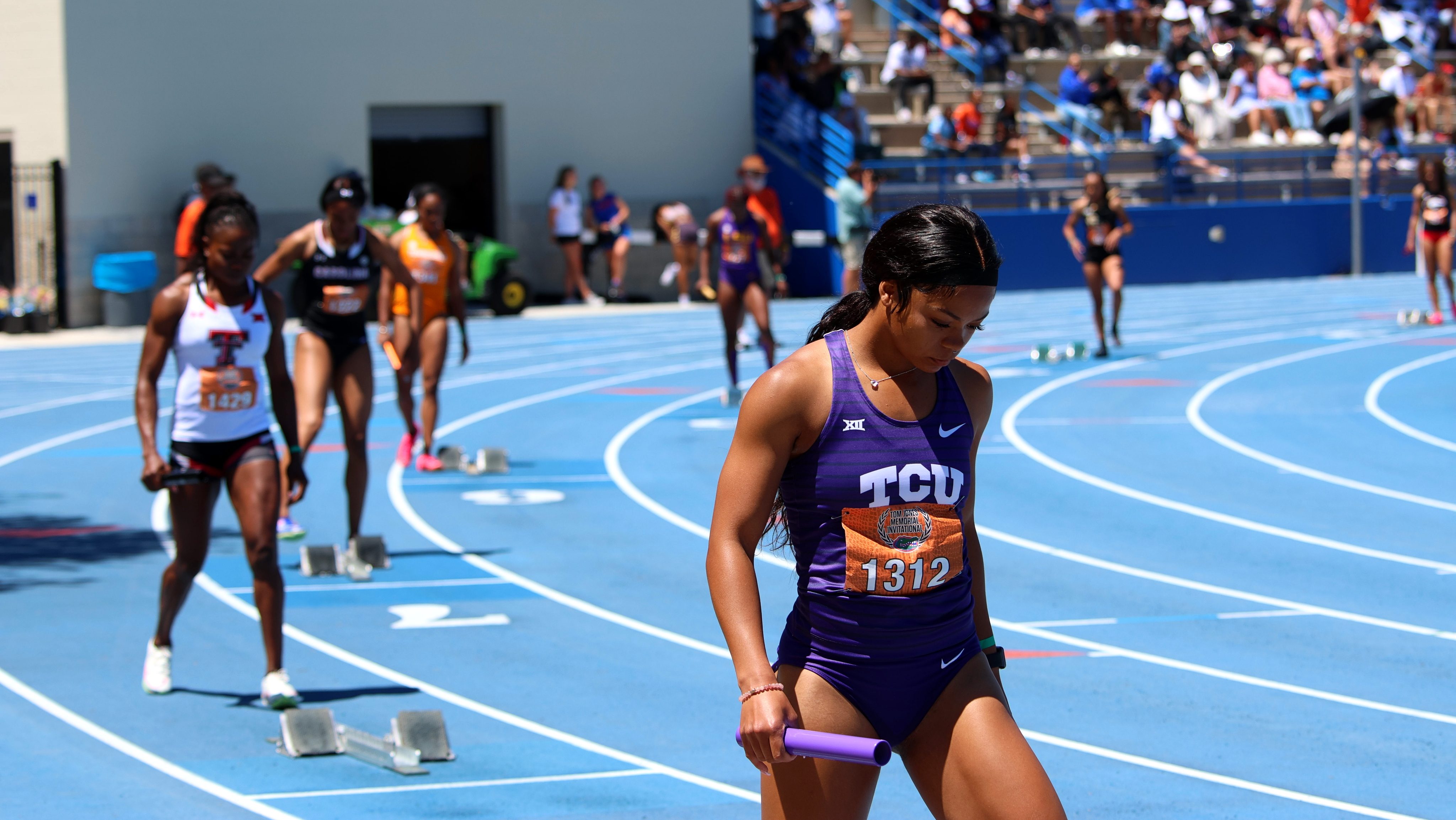
In addressing just the 4×100 Relay, several things can be improved upon to reduce: wasted time of use of lane and exchange.
I started my days of Track and Field in the 70’s and competed through college and coached for many years. My expertise has been in perfecting the relay exchange. Why? Because the majority of all relay races are lost in the Exchange. From beginning runners to the highest levels of competition.
The problem with the 4×100 relay races is that many of the Coaches come from an array of different Track and Field events. While many other Coaches (God bless them) are teachers filling gaps where help is needed. And to no fault of their own, lack the knowledge of a 4×100 relay and then go to these clinics that even the instructors fall short.
A 4×100 Relay is won in 3 parts;
- Lane use
- Take Off
- Exchange
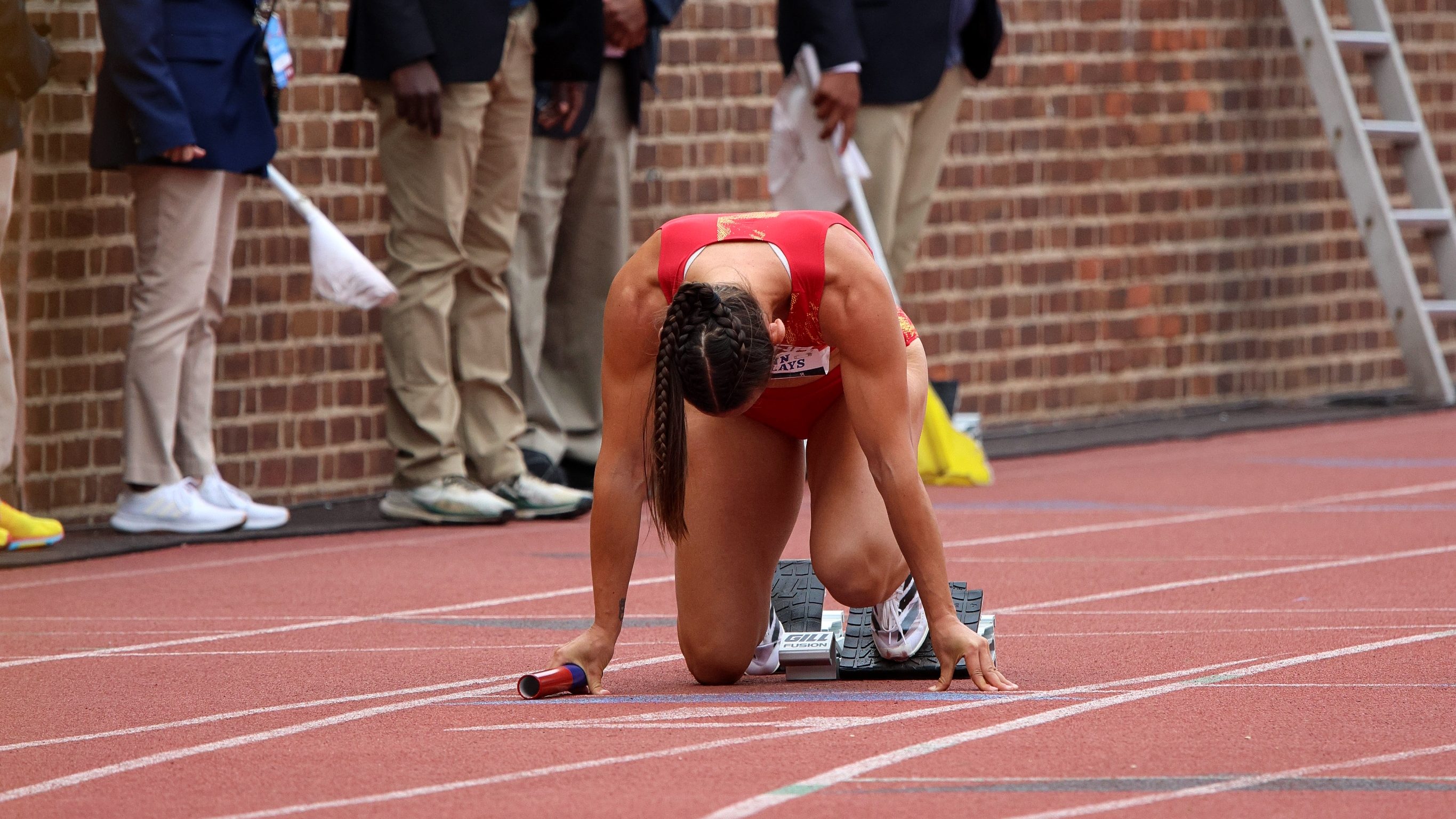
FIRST LEG
- The incoming sprinter is running a corner. Which means their hugging the corner, they’re increasing speed. The incoming runner needs to continue hugging the inside of the lane through the exchange.
NOTE: The incoming runner in no-way is at fault for: dropping the baton, leaving to soon, or lane violation. It’s 98 % of the time the
receiving sprinter that messes up the exchange. The receiving leg should never step in front/Cut-off an incoming runner.
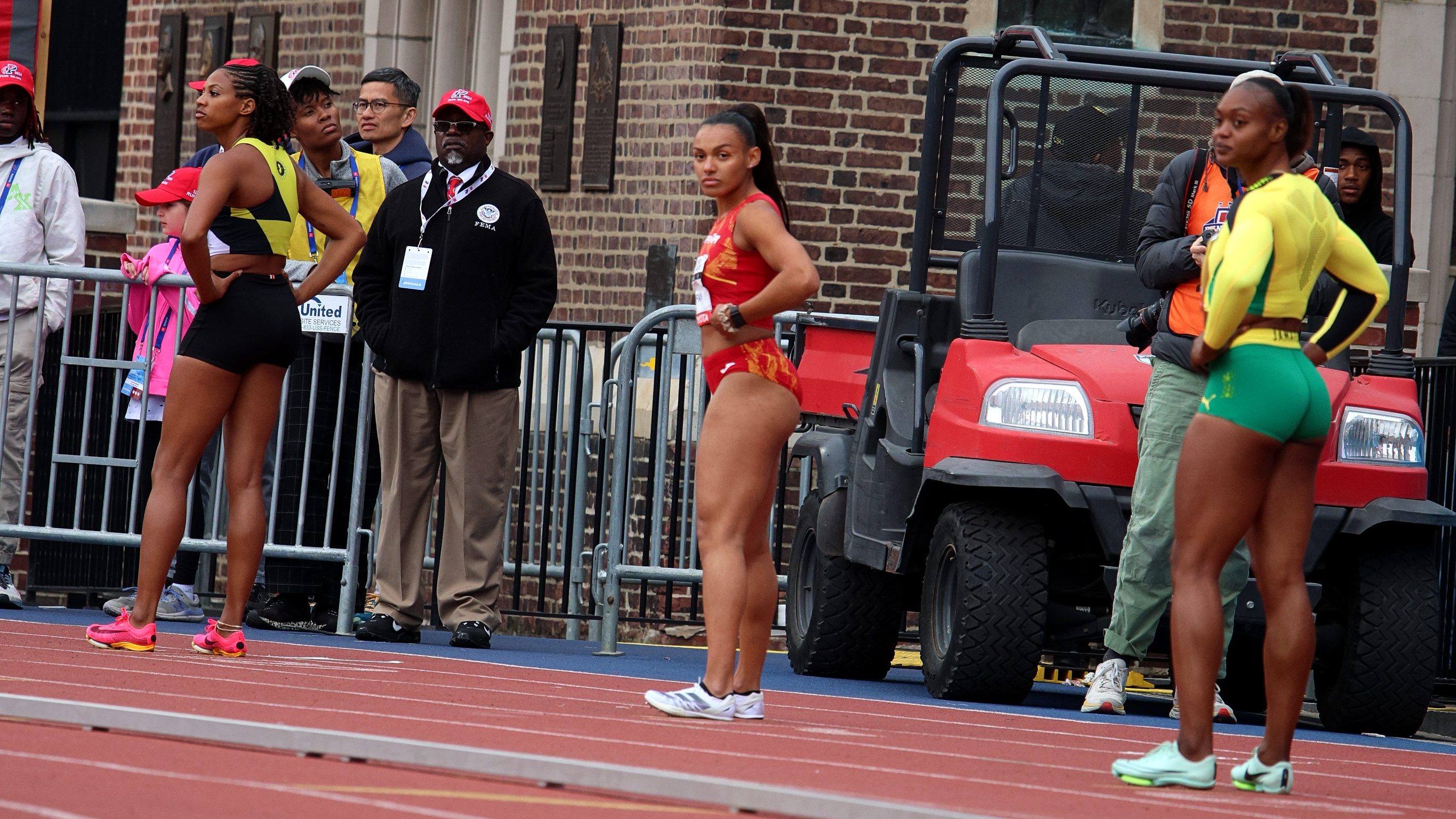
SECOND LEG
- The second leg runner should be starting on the outside of the lane for both visual and take off.
NOTE: Many track facilities do not like tape left on their track so, the second, third and fourth leg runners should have a tennis ball cut in half or a small cone to place as their take off markers. - The second legs should position themselves right leg front left leg back. This way they can see the gun starter and the incoming runner. Now here’s where coaching comes in. The second leg runner when they first react to the incoming runner have a normal motion to step to the inside of the lane. A coach has to make sure that the runner’s back left leg DOES NOT step to the inside of the lane, but to the middle of the lane. Why, you ask?
- It’s a slower step and takes longer to pull the back leg in front of you.
- You can trip the incoming runner if you take off slow and/or have a lane violation avoiding running into each other.
- The runner can accelerate faster.
- Standing starts should be practiced daily. Right leg front then alternate to left leg front. The reason being, is that a coach can see where the runner needs to improve or what leg each runner may be better in exchanges. Always practice pushing off with both feet during practices. Some athletes like to favor a foot which decreases forward acceleration when starting from a standing position.
NOTE: When a runner is anticipating the incoming runner they should be positioned up on their toes or the balls of their feet rocking slightly. Never should a runner be flat footed. Flat footed means they’re lazy with no understanding on how to receive incoming speed. This is also why exchanges are poor.
- Once the second runner is taking off with no more than 4 drive steps staying to the outside of the lane, the left arm should go back in a natural motion (elbow up left hand extending) receiving baton on its way back to the forward position. All this should be in one motion. A receiving runner should never be holding their arm back while trying to build speed waiting for the baton. A hand that is extended in the back waiting to receive is slowing forward progress and slowing the body down. Why?
- The runner begins to slow because they need their arm for forward movement.
- The runner is now distracted and taking their attention off sprinting because they’re waiting for the baton.
- Waiting now engages the runner to worry about exchange violation.
Practicing steps (distance between incoming and advancing runner) is the foundation of precise acceleration. Marker placement is everything. If in High School or under start counting steps from the hash mark towards the beginning of the start of the exchange zone. Advanced High Schools and advanced programs start at the hash mark and out below the hash mark. The advancing runner should never leave too soon or too late from the mark of the tennis ball/small cone. Each runner should have confidence and trust in the other to be where there supposed to be and to leave at the right moment.
Start with 6-8 natural steps. Walk heel toe if you can’t walk the same naturally. Have to be consistent. Distance depends on the speed of the incoming runner or how fast the runner is advancing. That’s why time is needed to perfect the distance. It also depends on how fast the runner understands what’s going on. Elite runners are thrown together at the last minute so understanding how this works is crucial. But for those that run together for a season track meets are a good check point to see how well they’re doing and preparing for the end of the season Championships.
Baton Exchange
When exchanging a baton, the runners should be at arm’s length. Incoming runner extending baton out to meet the advancing runner’s hand. The advancing runner should be extending at the elbow with the elbow at a 90 degree angle so the arm can come back to a natural forward sprint motion. Runners should never be running side by side. Side-by-side lost the race and or didn’t make the qualifying time.
Knowing the correct steps will put both incoming runners extending their arm to meet the advancing runners extending elbow at the precise time in the middle of the zone so there is now wasted motion. If done correctly an incoming runner should never have to say “Stick”.
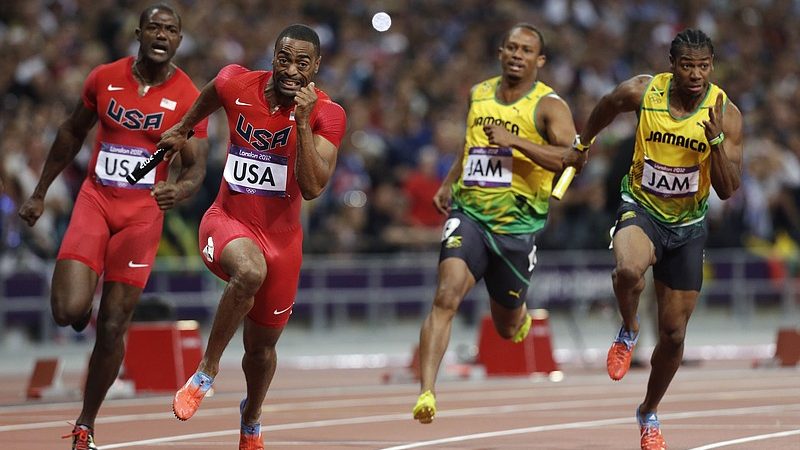
NOTE: The worst thing an advancing runner can do is switch hands after receiving the baton. Example: Take Usain Bolt fastest man alive ran for a Jamaican 4×100 relay team that set a team record unheard of in the 2012 Olympics. Imagine how much faster the time would have been if he would have left the baton in the left hand.

Also, in that race the U.S. Team Tyson Gay took off slow mismanaging the incoming speed of Justin Gatlin that ran the fastest time 100 time in the second leg. Each team would have extended their countries fastest times ever ran.
What is the key thing to a successful, exciting and rewarding 4×100 Relay? Trust! Trust in knowing your teammates will do what they are supposed to. A team that wins a Relay Championship is shared and means more than an individual race. Most run they’re fastest times not thinking about it, because they’re running to reach the next man.
Creating a relay team and practice
All relay exchanges need to be performed at the beginning of practice just after warm-ups or on a Saturday morning. Practicing after a workout will not provide accurate exchanges due to athletes’ fatigue. Once exchanges are completed then continue on with the day’s workout. Relays should be practiced at least two consecutive days before a race. Any changes to the order should be made on an open Saturday this will allow more attention to the change for both athlete and coach.
For H.S. and below: At the beginning of their season, two weeks after workouts have begun, tryouts should be done on a Saturday where all athletes are fresh to complete on a mock 100-meter race. This way the coaches eliminate the thought of favoritism, this also empowers the athletes knowing that every Saturday until the middle of season that they have an opportunity of being chosen for a relay team. Once you’re in the middle of the season the coaches will know who their 4×100 team will be.
Once the 6 individuals are chosen to begin the season’s 4×100 relay coaches and can now assign who will be more effective at which leg of the relay i.e. receive left hand or right hand, and who’s better on the curves or straight-away. Now the coach has the tools to be successful.
-Anonymous
 RunnnSphere
Leave a comment